Cankles: Causes, When to Worry, and How to Reduce Them
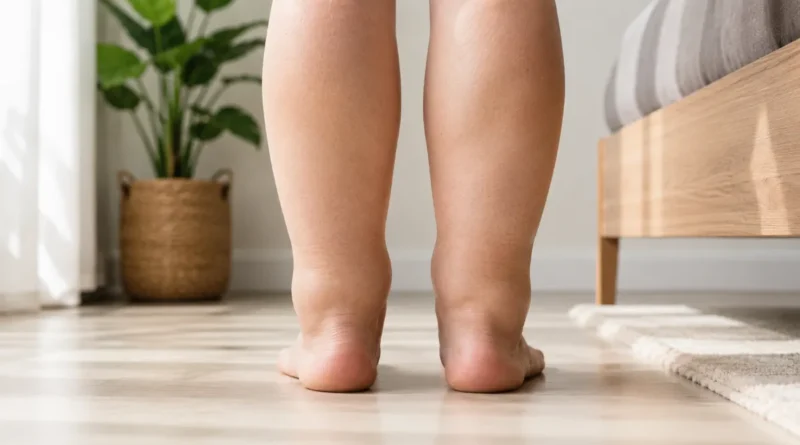
“Cankles” is an informal term for a lower leg where the calf and ankle have little visible narrowing between them. It is not a medical diagnosis. In some people, the shape is simply a normal feature of their bones, muscles, tendons, or fat distribution. In others, the appearance develops because the ankles or lower legs are swollen from fluid buildup.
That distinction matters. Natural ankle shape usually does not need treatment, while new, persistent, painful, or one-sided swelling can require medical evaluation.
What Are Cankles?
Cankles describe a lack of definition between the calf and ankle. Instead of the lower leg narrowing noticeably above the ankle, the transition appears relatively straight or broad.
The appearance can be influenced by:
- Genetics and natural bone structure
- Calf muscle and tendon shape
- Fat distribution
- Temporary fluid retention
- Chronic edema or other medical conditions
Some people naturally have larger ankles or a less pronounced calf-to-ankle taper. That can occur regardless of body weight and does not automatically indicate a health problem.
The important clue is whether the appearance has always been there or represents a new change.
Why Do Cankles Develop?
There is no single cause. The most useful way to understand cankles is to separate them into natural anatomy, body-fat distribution, and swelling.
Genetics and Bone Structure
Some people naturally have wider ankle bones, thicker tendons, or a calf shape that does not taper sharply toward the ankle.
These characteristics are largely determined by genetics and anatomy. Exercise and dieting cannot change the underlying size or shape of bones.
If your ankles have looked this way for years and there is no swelling, pain, or other unusual symptom, the appearance may simply be your normal anatomy.
- Read more: Cankles
Fat Distribution
Body fat can also contribute to a less defined ankle.
When someone gains body fat, some of it may accumulate around the lower legs and ankles. However, where fat is stored varies from person to person. Losing overall body fat can reduce fat in the lower legs in some people, but spot reduction is not possible.
Calf exercises cannot selectively burn ankle fat. They can strengthen the calf muscles, but they do not directly remove fat from the area.
Fluid Retention and Edema
Edema is swelling caused by excess fluid collecting in body tissues. It commonly affects the feet, ankles, and legs.
Temporary lower-leg swelling can happen after:
- Sitting for a long time
- Standing for extended periods
- Long flights or travel
- Pregnancy
- Hot weather
- Eating a high-sodium diet
- Certain medications
Medical conditions can also cause edema, including chronic venous insufficiency, heart failure, kidney disease, liver disease, and lymphedema.
Swelling may change throughout the day. For example, some forms of dependent swelling become more noticeable after prolonged standing and improve after the legs are elevated.
How Can You Tell If Cankles Are Caused by Swelling?
A change in appearance is more concerning when it is new or noticeably different from your normal leg shape.
Possible clues to fluid-related swelling include:
- The ankle or lower leg becomes noticeably larger over time
- The skin looks stretched or shiny
- The area feels heavy or tight
- Pressing the swollen area leaves a temporary indentation, known as pitting
- Swelling becomes worse after prolonged sitting or standing
Pitting can occur with edema, although not every type of swelling produces it.
If you are unsure whether you are seeing normal anatomy or swelling, a healthcare professional can assess the cause rather than relying on appearance alone.
Medical Conditions That Can Cause Cankle-Like Swelling
Several conditions can make the ankles or lower legs appear wider.
| Condition | What it means |
| Chronic venous insufficiency | Leg veins have difficulty returning blood toward the heart, which can contribute to blood and fluid pooling in the lower legs. |
| Lymphedema | Damage or blockage in the lymphatic system causes lymph fluid to accumulate in tissues. |
| Lipedema | A chronic disorder involving abnormal fat distribution, typically affecting the legs and occurring predominantly in women. |
| Heart failure | Reduced heart function can contribute to fluid buildup, including swelling in the legs and ankles. |
| Kidney disease | Reduced kidney function can contribute to salt and fluid retention. |
| Liver disease | Conditions such as cirrhosis can contribute to fluid accumulation in the legs and elsewhere. |
| Deep vein thrombosis (DVT) | A blood clot in a deep vein can cause sudden swelling, often affecting one leg. |
These conditions are not interchangeable, and swelling alone cannot determine which one is responsible. Diagnosis depends on the person’s symptoms, medical history, examination, and sometimes testing.
Can Cankles Be Reduced?
Sometimes, but it depends entirely on the cause.
If the appearance comes mainly from natural bone or tendon structure, exercise and weight loss will not fundamentally change the ankle’s skeletal shape.
If excess body fat contributes to the appearance, overall fat loss may reduce the amount of fat around the lower leg. However, the amount of change varies because everyone stores and loses fat differently.
If swelling is responsible, the priority is identifying and addressing the cause rather than trying to cosmetically reshape the ankle.
How to Reduce Fat-Related Cankles
If excess body fat is contributing to the appearance, focus on overall body-composition changes rather than exercises marketed as “cankle burners.”
Useful strategies include:
- Maintaining a sustainable calorie deficit when fat loss is appropriate
- Eating a nutritionally balanced diet
- Performing regular cardiovascular activity
- Strength training the major muscle groups
- Maintaining adequate sleep and recovery
Calf raises, lunges, and other lower-body exercises can strengthen the legs, but they do not specifically burn fat from the ankles.
In fact, building the calf muscles can change the proportions of the lower leg in different ways depending on your existing anatomy. It should therefore be viewed as strength training, not a guaranteed method for creating a narrower ankle.
How to Reduce Swelling-Related Cankles
For mild swelling caused by prolonged sitting, standing, or similar temporary factors, several measures may help:
Move Regularly
Avoid staying in one position for long periods. Walking and periodically moving the ankles can help maintain circulation, particularly during long periods of sitting or travel.
Elevate Your Legs
Raising the affected legs can help reduce some forms of edema. Mayo Clinic notes that elevating an affected limb above the level of the heart can help with mild edema.
Moderate Excess Sodium
A high-sodium diet can contribute to fluid retention in some people. Reducing excessive salt intake may therefore help with swelling.
Review Medications With a Healthcare Professional
Some medicines can cause edema, including certain blood-pressure medicines, steroids, estrogens, and other drugs. Do not stop a prescription medication on your own. If swelling began after starting or changing a medicine, discuss it with the prescribing clinician.
Treat the Underlying Cause
Persistent edema is not something to treat purely as a cosmetic problem. If an underlying condition is responsible, treatment needs to target that condition.
Compression garments, for example, can be useful for some forms of edema, but the appropriate treatment depends on the cause and should be determined with professional guidance.
When Should You See a Doctor About Cankles?
Make an appointment with a healthcare professional if ankle or leg swelling:
- Is new or unexplained
- Keeps returning
- Is persistent or getting worse
- Affects both legs and does not have an obvious explanation
- Causes significant discomfort
- Is associated with other swelling in the body
Persistent swelling can have several possible causes, so an examination may be necessary to determine whether it is simple fluid retention, a vein or lymphatic problem, medication-related, or related to another medical condition.
When Is Leg or Ankle Swelling an Emergency?
Do not assume sudden swelling is simply “cankles.”
Seek urgent medical attention for sudden swelling, particularly when it affects only one leg or is accompanied by pain. A deep vein thrombosis can cause sudden swelling and pain in one leg.
Seek emergency medical care if leg swelling occurs with:
- Chest pain
- Difficulty breathing or shortness of breath
- Coughing blood
- Fainting or severe dizziness
These symptoms can indicate a potentially serious blood clot or cardiovascular problem and require immediate assessment.
Frequently Asked Questions
Are cankles caused by being overweight?
Not necessarily. Excess body fat can contribute to a wider-looking ankle, but genetics, bone structure, muscle and tendon shape, and fluid retention can also affect the calf-to-ankle appearance. People at different body weights can naturally have less ankle definition.
Do calf exercises get rid of cankles?
No. Calf exercises strengthen the calf muscles but cannot selectively remove fat from the ankle area or change the underlying bone structure. Overall fat loss may reduce fat-related fullness, but results vary between individuals.
Can swollen ankles be caused by sitting too long?
Yes. Staying in one position for a long time can contribute to fluid buildup in the legs and ankles. Regular movement can help reduce this type of swelling.
Can pregnancy cause ankle swelling?
Yes. Pregnancy can contribute to edema, including swelling in the feet and ankles. However, sudden or severe swelling during pregnancy should be discussed promptly with a healthcare professional because it can sometimes be associated with pregnancy complications.
Can medications cause swollen ankles?
Yes. Several medications can contribute to edema, including some blood-pressure medicines, steroids, estrogens, and other drugs. A healthcare professional can determine whether a medication may be contributing to the swelling.
Is lymphedema the same as ordinary ankle swelling?
No. Lymphedema occurs when the lymphatic system cannot adequately drain lymph fluid, causing persistent swelling in affected tissues. It has different causes and management from temporary swelling after prolonged sitting or standing.
Are cankles unhealthy?
Not necessarily. Some people naturally have wider ankles or less calf-to-ankle definition without having any underlying health problem. The more important concern is a new, persistent, worsening, painful, or unexplained change in swelling.